RAGE AGAINST THE MACHINE WAS VERY CLEAR*
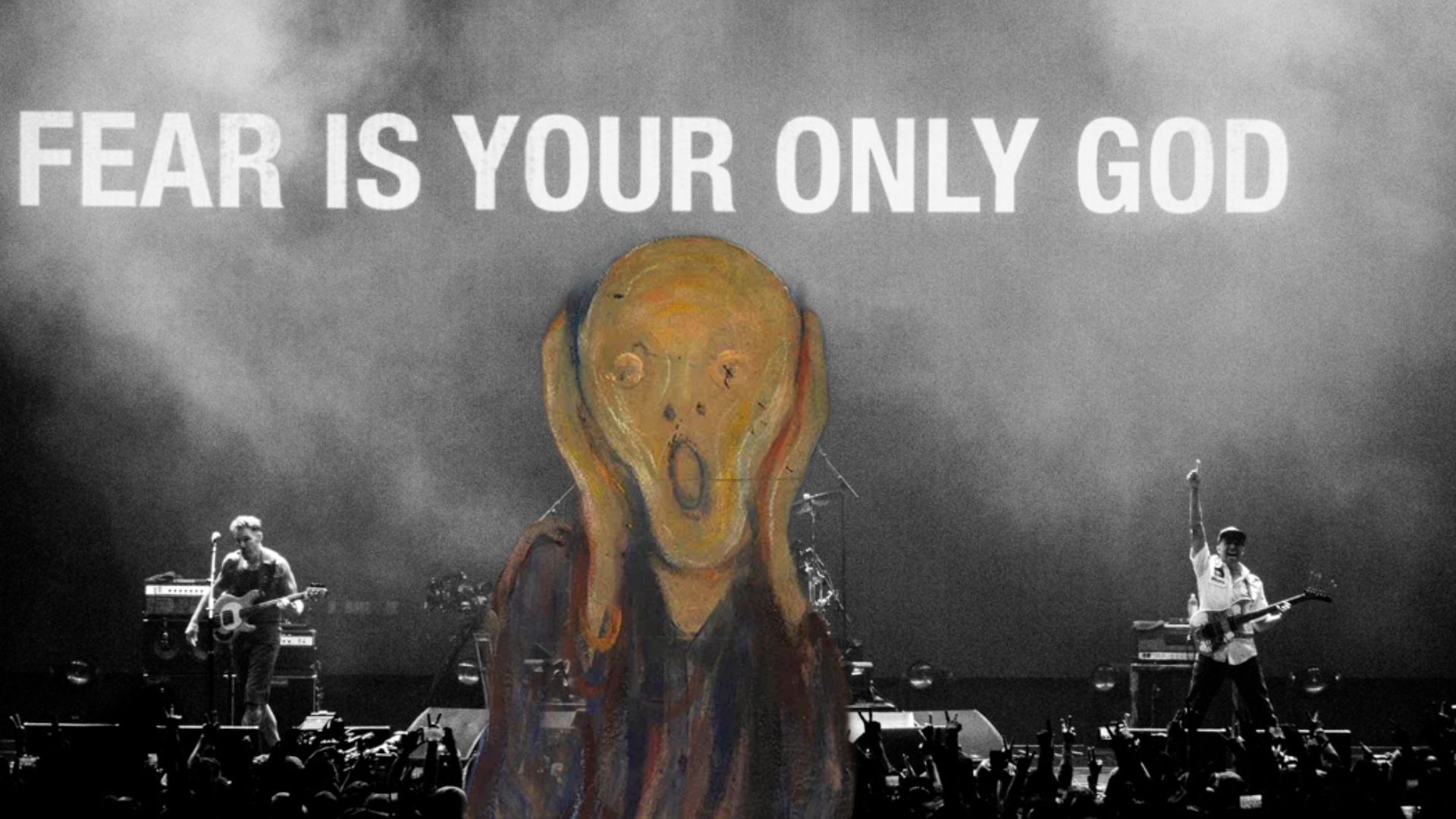
*WE WERE NOT
The funny thing about Rage Against the Machine is that they are one of the rare bands where the great cultural misunderstanding was not caused by subtlety. They were not hiding the message. They were not smuggling politics into the room under a blanket. They named the machine in the band name and then spent a decade yelling at it with heroic specificity. The problem, as usual, was us. We heard the riffs. We felt the release. We screamed the parts that felt good to scream. And somewhere between MTV, gym speakers, burned CDs, parking lots, festivals, and whatever was happening to the American male nervous system in 1999, a very clear band became a very useful feeling.
Which is why Rage should feel like the most obvious band in the world right now.
Look around. The machine is not exactly hiding. Every platform is a little factory for outrage, alienation, surveillance, performance, monetized collapse. If there was ever a moment built to receive a band that could turn systemic fury into something physical, disciplined, and impossible to mistake, it should be this one.
And yet.
Rage feels present, sure. Relevant, obviously. But not central in the way they almost absurdly should. Which is the insane part. Because the world caught up to them and somehow still didn’t become more capable of hearing them. That, I think, is the real misunderstanding. American culture learned how to absorb rage without absorbing direction. It learned how to keep the feeling and lose the structure. And Rage, maybe more than any band of their era, exposed the difference.
I. “Rally ’round the family…”
Rage Against the Machine emerged at a time when American music treated genres like property lines (which sounds dramatic, but it’s true). And the late ’80s / early ’90s were full of everyone stealing from everyone else musically and still pretending like boundaries mattered. Metal here. Punk there. Hip-hop becoming the most important force in American music while a lot of rock treated it like a visitor they respected to their face but didn’t want using the good towels.
Record stores helped. Radio helped (which I’m sure sounds like white noise to a lot of you). MTV helped (R.I.P.). Then Rage showed up and basically said the border was the problem. Not just between genres. But between music and politics. Between anger and analysis. Between your body feeling something and your brain trying to understand it by committee.
And here’s the part that still feels insane: it never sounded like an experiment. And probably, honestly, it should have.
Think about it. Rap cadence. Metal force. Punk politics. Funk groove. On paper, it was like four incompatible things being welded together and you couldn’t smell the fumes. Just four guys in a rehearsal room going, “Okay, but what if Public Enemy had heavier guitar?” which is the kind of idea that has absolutely destroyed several basements and at least one generation of cargo shorts.
They sounded finished. And in fact, it’s still the thing that still separates them from all the rap-rock and nü-metal that followed, with that very obvious “we are combining elements” energy and you could hear the math.
Morello became the immediate headline because, frankly, what else were critics supposed to say? Here was a guitarist who sounded like he was trying to extract a confession from the fucking instrument. Every description of him from the period eventually wandered into the same neighborhood: turntable scratches, DJ effects, industrial textures, noises no guitar should reasonably be making.
And yes, fine, the sounds were wild, but that was never the whole point. Lots of our greatest guitarists find fuck with the axe in wild ways. Rock history is full of guys accidentally discovering one cool sound and then building an entire legacy around it. What made Morello different was how controlled his weirdness was. Nothing on those records sounds like noodling. Nothing shows off and then wanders away from the song like it’s going to look at itself in a mirrored vest. Every burst of feedback, every toggle-switch stutter, every shriek that sounds like a fax machine getting a death threat is doing a job.
That control runs through the entire band.
Zack de la Rocha didn’t write or perform like a traditional frontman. Dude was floating in metaphor. He never did that rock singer thing where the feelings were very big and the meaning was mostly being spit out of a smoke machine. His lines arrived compressed, direct, decided. Plenty of singers sound like they’re discovering a thought mid-bar but Zack always sounded like the idea had already been locked and loaded. He was just firing them off.
I mean ‘They don’t gotta burn the books, they just remove ’em’ is not exactly asking you to get out a corkboard and string. Which is important because people talk about them now as if the politics were embedded somewhere deep in the liner notes. They were not. The politics were the surface. Targets were named. The message was not vague. We were just very good at making them feel vague once they became useful to us.
But I’m getting ahead of myself.
Behind de la Rocha and Morello were Tim Commerford and Brad Wilk, who understood something an alarming number of later bands never really got: groove is not about being loose. Groove can be like a room with no exits.
Rage’s rhythm is a lot of the reason the whole thing works. Commerford anchored tracks like he was bolting the stage to the earth. Wilk never overplayed. He didn’t spray drums around like a dude trying to win an argument at Guitar Center. He understood that if the room is already on fire, maybe you do not need to light yourself on fire also.
That foundation gave Morello permission to make guitar sound impossible. Or Zack’s vocals something to lock into. Or why a Rage song feels less like a jam and more like a mechanism. It’s also what made their self-titled arrival so startling. Not because it was loud. Plenty of records were loud in 1992. At that time, America was a country producing both mall fountains and Pantera at the same time—we had the range.
What jumps out is how little debut energy the record has. No audible identity crisis. No “here’s our funky one,” “here’s our metal one,” “here’s the one where we maybe get played after Pearl Jam.” It didn’t sound exploratory, it sounded … deployed.
Honestly, the word deployed keeps coming up because I don’t know a better one. Most bands spend a few records sanding themselves. Rage arrived coherent. Annoyingly coherent. Suspiciously coherent. The kind of coherent where you almost resent them for not leaving more evidence of struggle. And somehow, this incredibly specific, politically explicit, structurally locked-in band became huge.
Not like “cool band your friend from Portland likes” huge.
Like MTV huge. Alternative radio huge. Dorm-room huge. Suburban-parking-lot huge. Gym-speaker huge. The kind of huge where someone who could not identify Chiapas on a map was still absolutely ready to yell ‘Rally ’round the family with a pocket full of shells’ while attempting a bench press with no form.
And the funny thing in hindsight is, Rage did not really have to soften to get there.
The language stayed direct. The structures stayed tight. The grooves stayed locked. If anything, Evil Empire tightened the screws. “People of the Sun” opens with the subtlety of a brick through a courthouse window. “Bulls on Parade” sounds less like rap-metal than a groove welded shut.
They didn’t become broad, our culture just got better at moving them around.
Which, as it turns out, is not the same thing as getting them.
II. “Some of those that work forces…”
The easiest way to misunderstand Rage is to hear the records as emotional overflow. Loud band, loud feelings. Groups of dudes going into a studio and deciding, collectively, to beat the shit out of capitalism in Drop-D tuning.
I get that, and that reading is extremely persuasive when you are sixteen hearing “Killing in the Name” through a pair of blown Pioneer speakers in the backseat of somebody’s Honda Civic while the driver takes a corner way too fast because the chorus just hit. That is not a minor listening context. It’s, like, theology.
Rage worked physically before anything else. The riff hit. The drums hit. Zack hit. Your nervous system lit up before your brain had time to assemble the civics lesson. Which is of why the band spread so effectively. You didn’t need to understand everything immediately. You just had to feel it. But if you go back now—really go back, outside the nostalgic glow of all your “man, music used to mean something” Facebook-comments—what jumps out is not how wild the songs are, but how controlled they are.
“Killing in the Name” is the obvious example because culture eventually flattened the song into one enormous portable chorus. Everybody remembers the release. Everybody remembers the chant. At this point, ‘Fuck you, I won’t do what you tell me’ can apply to institutional racism, airline bag check fees, HOA regulations, parking enforcement, or being asked to reset your password by a streaming service that already has your credit card info.
Inside the actual song, though, the ending only works because of the pressure built before it.
That opening riff doesn’t really develop in a traditional sense. It loops. Commerford’s bass reinforces the repetition instead of decorating it. Wilk enters with this almost frustrating restraint, the kind of drumming that only works when somebody understands that power is not the same thing as constant motion. Then Zack enters: ‘Some of those that work forces are the same that burn crosses,’ and the words land directly because the song doesn’t give them anywhere else to go.
That is what imitators missed.
A lot of bands after Rage copied surface behavior. Louder guitars. More yelling. More testosterone. More backward baseball caps. More Oakley sunglasses indoors (which remains one of the great sociological crimes of the era). But Rage was not powerful because they were angry, they were powerful because they were so structured. Because anger without structure evaporates almost immediately. It feels intense for a second, then it becomes noise.
Rage tracks hold pressure.
Listen to “Bulls on Parade” now. Morello’s guitar still sounds faintly impossible, like he figured out how to turn a six-string into surveillance equipment. But underneath that, the groove is absurdly stable. Wilk and Commerford keep the track pinned to the floor while Zack delivers lines with the clipped precision of somebody trying to conserve oxygen inside a burning building.
And those that refrain—’Rally ’round the family with a pocket full of shells’—not exactly a snow globe of ambiguity. And because the rhythm section keeps everything rigid, the meaning doesn’t drift very far away from the sound carrying it. That’s the trick. While a lot of heavy music uses repetition until a song becomes texture, Rage uses it to reinforce. Every return to the groove narrows the focus. Every phrase comes back heavier because the structure keeps squeezing.
By the time “Killing in the Name” reaches its famous ending, the song has spent several minutes tightening its grip, so when Zack finally hits, ‘Fuck you, I won’t do what you tell me’, it feels unavoidable.
Then, of course, comes a part culture never really carried around with the same enthusiasm: ‘Now you do what they told ya’ It’s the part that makes the song more than a cathartic middle finger. Suddenly the chant folds back onto itself and the song raises the possibility that rebellion can become performance just as easily as obedience can. That refusal can become ritual. That screaming along can feel like resistance without necessarily becoming resistance. Which is maybe not the most fun thing to think about while you’re sixteen back in that Honda Civic.
Fair.
But it’s in the song.
The reason that line never traveled like the chorus did is simple: you have to stay inside the song long enough for the structure to turn on you a little, and mass culture does not love being turned on a little, which explains so much of what happened to Rage once they got enormous. The songs were built as complete systems, but the culture started carrying around the most portable parts first.
Go listen to “Testify” now and it sounds less like a rock song than a machine designed to survive saturation. It opens with broadcast fragments, mediated noise, and that feeling of everything being processed through a screen before locking into one of the tightest grooves the band ever recorded.
‘Who controls the past now controls the future’
That line should feel corny by now. Or dated. Or too on the nose.
It doesn’t.
Plenty of political music becomes so abstract it just turns into a weather pattern. Plenty becomes so didactic it stops being art and starts feeling like a meeting you forgot you were supposed to attend. Rage found the middle because the music did part of the persuasion. The songs made the body understand pressure before the intellect had finished filing paperwork, which is also why they still hit. Not because they “became relevant again,” which is one of those phrases people use when old art starts making the present uncomfortable.
Rage didn't find their back into relevance, their songs were always clear. The world just got louder around them, and weirdly, that makes their clarity easier to hear.
III. “What we don’t know keeps the contracts alive…”
When people talk about Rage “breaking through,” they sometimes make it sound like the band and the audience met each other halfway. Like Rage softened a little, or widened a little, or learned how to become more digestible to mainstream.
But I don’t think that’s what happened. The band didn’t become easier, delivery systems just got better at moving difficult things without asking too many questions. Which, honestly, is one of America’s top skills.
MTV is the obvious place to start, and I know talking about MTV now makes you sound like you are explaining the Bronze Age to a child holding an iPad, but for a certain stretch of the ’90s, MTV was not just a music-video channel, it was one of the main processing centers for youth culture. It told you what rebellion looked like, what cool looked like, what sincerity looked like, what selling out looked like, and eventually what all of those things looked like when filtered through corporate sponsorship, spring break coverage, and a surprising number of Smash Mouth-adjacent haircuts (for a run-through of MTV’s influence, read my eulogy for it here).
Rage translated immediately to that environment, not because executives were sitting around saying, “Finally, a band that can help us explain imperialism between Real World reruns,” but because TV responds to immediacy.
Image clarity. Rhythm clarity. Physicality. Can someone flip past this for fifteen seconds and instantly understand the emotional temperature?
With Rage, yes. Jesus, yes. Morello looked visually impossible. Zack projected intensity without theatricality. The band had force without looking like they were begging you to notice it. The grooves hit fast. Choruses hit faster. Even if a viewer had no idea what the song was about, the impact registered.
And impact scales.
MTV did not require sustained attention. In fact, MTV was kind of a beautiful little attention-fragmentation machine before the internet fully industrialized the process. Songs became images. Images became moments. Moments became vibes. Vibes became identities. Identities became things you could purchase at the mall with a chain wallet brushing against your JNCOs like a curtain in a haunted house.
Rage songs were incredibly good at surviving partial exposure.
You could catch thirty seconds of “Bulls on Parade” while walking through a room and still feel like something had happened. You could hear a riff from another room and recognize the threat level. You did not need the full argument for the adrenaline to work. But that also meant the songs became culturally recognizable through pieces. And that wasn’t because the songs were poorly built, but because mass culture extracts selectively.
Radio made this even weirder.
Late-’90s commercial rock radio occupied one of the strangest contradictions in modern entertainment: it needed music that sounded rebellious enough to energize suburban teenagers while remaining compatible with the systems selling things to those same suburban teenagers. It needed danger in a format that could sit comfortably between car dealership ads and a morning-show guy who’s on-air handle was Scorch.
Rage somehow worked there, which, to be clear, should have been impossible.
“Guerrilla Radio” is basically a song about the machinery of media that also happens to be catchy enough to blast out of a free-standing Abercrombie parking lot at an irresponsible volume. Everything about it works as a piece of mass-circulating rock music, and underneath that, it is openly suspicious of the exact systems helping it circulate.
This is where the whole thing starts to feel less like irony and more like a magic trick performed inside a burning shopping mall.
See, we encounter songs bodily before they encounter them intellectually. Rhythm gets in first. A riff enters the nervous system before the meaning finishes introducing itself. A song can survive partial understanding if the physical structure is strong enough. Rage’s physical structure was ridiculously strong, which is why their songs moved between environments that should not have been able to share them.
Alternative radio.
College dorms.
Activist spaces.
Suburban gyms.
Skate videos.
House parties.
Sports arenas.
Military hype compilations uploaded by guys tagged xXSniperWolf1776Xx.
Early YouTube montages where the editing philosophy was apparently “what if every headshot in Halo 2 had a traumatic childhood?”
All co-opting the same songs with different levels of attention. And somehow they still functioned everywhere.
Most politically explicit art struggles to scale because specificity creates friction. Friction slows circulation. Rage solved that problem musically without really solving it ideologically. The songs stayed specific but the listening became partial. And live performance made that split even more obvious.
Early audiences reportedly had trouble classifying the band because the pieces were familiar but the arrangement was not. By the late ’90s, classification didn’t really matter anymore. Rage had become a festival-scale organism and people weren’t trying to decide what bin to put them in, they were trying to survive the collective detonation.
Woodstock ’99 is the obvious image here because that festival now looks less like a music event and more like the official state funeral for the idea that the 1990s were stable. Every documentary about Woodstock ’99 eventually becomes footage of shirtless men destroying plywood while Korn plays somewhere in the distance like the soundtrack to America entering the Monster Energy Age.
And in the middle of all of that, Rage still sounds controlled.
That’s what gets me.
The environment is pure id. Heat. Trash. Bad logistics. Worse vibes. Thousands of people acting like the social contract had been replaced by a warm bottle of Surge and a Limp Bizkit set. But the band doesn’t loosen. Zack doesn’t get vague because the crowd got bigger. Morello doesn’t drift into Guitar Hero self-parody. The machine keeps functioning exactly as it was designed while the culture around it increasingly processes the experience as release.
Now, I don’t want to retroactively become some joyless guy standing at the back of the room with crossed arms saying, “Actually, this catharsis is insufficiently rigorous.” Not at all. Those songs detonated live. The collective shouting was real. The movement was real. The adrenaline was real. Rage understood mass energy at a terrifying level. But the bigger the audience became, the wider the range of listening became too.
Some people were fully inside the architecture. Some people were there for the energy. Some people knew the politics. Some people knew the chorus. Some people probably thought “Sleep Now in the Fire” was just a cool thing to put on a burned CD next to “Break Stuff.”
That is how mass culture works, it keeps the fastest-moving parts. And Rage accidentally created some of the most durable portable fragments in modern rock history.
‘Fuck you, I won’t do what you tell me’
That is what mass culture does.
It atomizes.
Which means the problem was not that Rage became less specific as they spread, the problem was that culture became extremely good at consuming specificity in pieces, and Rage’s music was strong enough to survive being broken apart.
Which may have been the beginning of the misunderstanding.
IV. “Fuck you, I won’t do what you tell me.”
There is a very smug version of this conversation that pops up every few years, usually whenever Rage Against the Machine trends because somebody somewhere suddenly discovers that the band had politics the way medieval villagers discovered fire.
Then the internet does what the internet does.
People pile on to say, “Can you believe these idiots never knew what Rage was about?” as if the entire history of Rage fandom was one giant misunderstanding. As if millions of listeners spent the 1990s nodding along to songs they completely failed to comprehend while waiting for Twitter, or whatever we are calling that burning building now, to explain it to them.
That explanation has always felt too easy, letting everybody perform hindsight intelligence without actually thinking about how culture works once music reaches mass circulation.
Because the truth is more complicated, and, honestly, more interesting.
Rage didn’t become culturally diffuse because audiences were uniquely stupid. The songs were absorbed the way everything gets absorbed once it enters American mass culture: partially, emotionally, out of sequence, usually while somebody is doing something else.
Driving.
Lifting weights.
Drinking warm beer in a parking lot.
Watching MTV with one eye while waiting for the video they actually wanted.
Screaming along in a dorm room while one guy in the corner had just discovered Noam Chomsky and was about to become insufferable for six very important weeks.
That is how most people encountered Rage, which is to say: physically first.
And I don’t think that’s a failure of listening. Not exactly. Again, that’s how music works. The body gets there first. Rage understood that, maybe better than almost any political rock band ever has. The problem is that American mass culture understood it too, or at least learned it very quickly. Once the songs entered the bloodstream, the fastest-moving parts started traveling ahead of the structures that gave them meaning.
This is where “Killing in the Name” becomes the perfect case study, but not because we need to run the song back again. The important thing here is what happened after the song left the song.
Because culture didn’t carry the whole mechanism forward. It carried the useful part. The portable part. The part you could scream at a party, drop into a movie trailer, or blast over a sports montage. And that’s not because people were too stupid to understand it. It’s because the reversal requires staying inside the thought long enough for the song to turn on you. Mass culture is good at feeling, not at telling you what the feeling is actually for.
Once Rage got big, the songs started living multiple lives at the same time. They were still Rage songs, but they were also becoming gym fuel. Sports-arena fuel. Movie-trailer fuel. Dorm-room fuel. Skate-video fuel. Parking-lot fuel. The sound of generalized refusal for people who may or may not have known what, exactly, they were refusing at any given moment.
And look, I get why that sounds like a knock, but it isn’t—entirely.
Part of the reason Rage mattered is that the songs worked even when they were only partially understood. That’s not a weakness. It’s power. A bad political song has to corner you with the message because the song itself can’t carry weight. Rage had the opposite problem. The music was so physically convincing that it could survive outside the argument.
That’s not nothing, it’s just where the trouble starts.
Because American culture is extremely good at separating a feeling from the thing that produced it. We do this constantly. We turn rebellion into wardrobe. We turn grief into content. We turn solidarity into a logo. We turn counterculture into a retail category with distressed fonts and a very small legal department. Punk becomes mall fashion. Protest becomes campaign language. Alienation becomes something you can sell back to teenagers in three colorways.
Rage Against the Machine was always going to be a difficult case inside that system because the band resisted abstraction so aggressively. The songs kept naming targets. The grooves kept reinforcing them. The structures kept narrowing the argument instead of letting it float away into coolness.
And still, culture found a way.
Sports arenas wanted the aggression. Gyms wanted the adrenaline. MTV wanted the image. Radio wanted the hook. Action trailers wanted the voltage. Dorm rooms wanted the feeling of having an argument with America without necessarily having to do the reading. By the early 2000s, Rage existed simultaneously as one of the most politically specific bands in mainstream rock and as generalized rebellion wallpaper for an entire generation.
The same song could soundtrack anti-authoritarian critique in one context and a UFC highlight reel in another (which is not even a joke so much as a census category).
That is the thing the smug version of the conversation misses. It’s not that millions of people heard Rage and understood nothing. It’s that people understood different amounts at different times, through different delivery systems, under different levels of attention, while the culture around them got better and better at stripping the fastest-moving parts for use elsewhere.
So the real self-own is not that audiences missed the point completely, it’s that American culture became incredibly good at letting us keep just enough of the point to feel something while losing enough of the structure to avoid being changed by it.
Which is why the Rage being “ahead of their time” framing never totally worked for me.
I know what people mean when they say it. The themes still feel current. The songs still land. The band still sounds like it is yelling from inside the walls of whatever broken thing we are currently pretending is normal, but Rage was not prophetic in the mystical sense.
They weren’t hiding predictions inside coded symbolism. They weren’t Nostradamus with a wah pedal. The songs were explicit. Uncomfortably explicit. Almost rude in their refusal to offer listeners an easy exit.
Rage’s songs were specific.
The culture made them useful.
And useful things get stripped for parts.
So maybe the real story is not that Rage Against the Machine was misunderstood.
Maybe the real story is worse.
Maybe they were understood just enough.
But not always enough to stay inside the thought after the release. Not always enough to follow the anger back to its coordinates. Not always enough to notice when the machine had learned how to sell us the sound of hating the machine.
V. “Wake up.”
So why aren’t they the band of right now?
Because Rage requires duration. Not a lot, but some. You have to stay with the song long enough for the riff to become pressure, for the chant to become indictment, for the release to reveal what it has been building toward. Their songs aren’t just explosions of sound and fury. They are arguments that use explosions as form. And now almost everything is built to detach an explosion from the argument.
That’s the reason Rage feels so perfectly suited to the present and yet so strangely absent from it. The culture has never been ragier, and maybe never had less patience for machinery—musical, political, intellectual, emotional—that tells the rage where to go.
So listening to Rage now creates a strange kind of time problem.
Most bands from the 1990s carry at least some obvious residue of their era. Certain production choices harden around them. Certain sounds get trapped inside whatever year produced them. Even great albums can arrive in the present with a thin layer of historical dust on them, like you’re opening a very well-preserved artifact from a completed cultural moment.
Rage still sounds alarmingly current. Not “timeless,” which is one of those music-writer compliments that usually means “my dad also likes this.” Except the thing that lands hardest now is not aggression, it’s precision. And that precision feels different in the current environment because contemporary culture is absolutely drowning in visible anger while somehow becoming worse at sustained clarity.
Every platform runs on emotional escalation. Public outrage has become infrastructural. Entire industries depend on keeping everyone in a permanent state of low-level social combustion, where you are always reacting, always posting, always processing the latest institutional humiliation through a screen while twelve additional catastrophes load in the background like browser tabs slowly eating the remaining RAM of the American nervous system.
And a lot of the anger is real.
Some of it is necessary.
Some of it is thoughtful.
Some of it is absolutely performance.
Most of it lives in a blurry middle, because modern public life has forced everyone into this completely deranged hybrid role where you are somehow citizen, spectator, content creator, emotional broadcaster, amateur political analyst, and unpaid brand manager for your own deteriorating psyche.
Rage came out of a different communication environment.
Not a better one, necessarily.
I don’t want to do the thing where we pretend the pre-internet past was some noble republic of sustained attention and everybody was sitting around reading union pamphlets by candlelight between thoughtful conversations about media literacy. People were dumb then too. We had plenty of dumb. We had dedicated dumb infrastructure.
But it was structurally different.
Rage songs do not merely express anger. They organize it, which feels unusual now. Not because modern culture lacks intensity. God knows it doesn’t. Modern culture has intensity coming out of the vents. But intensity increasingly arrives detached from durable structure. Language gets optimized for circulation before it gets optimized for meaning. A statement appears, spikes, fragments, mutates into reposts and reaction content, and disappears beneath the next wave before the original thought fully settles.
And because everything moves through systems designed for portability, people start building thoughts to be portable from the beginning. Captions. Clips. Screenshots. Quote cards. Slogans. Little emotionally efficient packets designed to survive environments with the attention span of a raccoon trapped inside a fireworks factory.
Rage wasn’t really built for that ecosystem.
Or maybe the better way to say it is: Rage existed right before that ecosystem fully swallowed the culture around it.
“Killing in the Name” no longer sounds only like a famous chorus attached to a riff everybody knows. It sounds like an escalating structural argument that gradually removes interpretive exits until the listener either commits to the full sequence or retreats into adrenaline. “Bulls on Parade” stops functioning only as gym fuel and starts revealing itself as a study in compression: how much tension can you hold inside repetition before the thing ruptures? “Testify” sounds less like a protest song now than a machine engineered specifically to survive informational overload without losing conceptual coherence.
Which is eerie.
Because the surrounding culture has become so loud, so flattened, so relentlessly optimized for reaction that hearing something this structurally exact now feels almost unnatural.
Like, wait.
A thought can do this?
It can build?
It can be angry and still know where it’s going?
This is probably where this blog risks becoming a sermon, which I can feel happening and I am trying to steer away from it because nobody needs another exhausted “music used to mean something” essay that ends with someone blaming TikTok for the death of the human soul while Pearl Jam plays faintly in the distance like a Gen X hospice monitor.
That isn’t the point.
The point is not that modern anger is fake and old anger was real.
The point is that Rage still sounds startlingly coherent in an era increasingly defined by fragmentation.
Resistance photographs beautifully. Defiance clips well. Entire online identities can be sustained indefinitely through the maintenance of a recognizable tone of permanent exasperation toward collapsing institutions. The internet rewards emotional immediacy because emotional immediacy drives engagement, and engagement is the sacred energy source powering the entire haunted carnival ride.
Rage still sounds weirdly uninterested in performance as performance.
Even at their most theatrical, the songs are brutally functional. And maybe that’s the strangest feeling these records produce now. Not nostalgia, or catharsis. But recognition. Recognition that the songs were always saying what they meant. Recognition that the culture spent years engaging with the emotional payload while only partially holding the machinery underneath it. Recognition that the records themselves never actually loosened, even while everything around them increasingly did.
The music didn’t become more relevant over time. The surrounding noise just became so constant, so ambient, so structurally unstable that Rage Against the Machine now sounds almost unnervingly precise by comparison. That’s why they should be the band right now. And still, Rage does not quite belong to this moment in the way they should.
Because while this moment doesn’t lack rage, it lacks form. It lacks duration. It lacks places where anger can become more than posture, more than signal, more than a clip of itself. Rage Against the Machine understood that anger without structure becomes exhaust. The culture around them understood that exhaust could still be useful.
So maybe the reason they sound so present now is also the reason they feel so absent.
They were built for a world furious enough to need them.
We became a world too fragmented to hold them.
#RageAgainstTheMachine #WeWereNot #TheMachineWasRightThere #PleaseReadTheBandName #ClearSignalBadReceiver #CatharsisScalesBeautifully #TheChantOutlivedTheStructure #AngerWithCoordinates #MTVDidSomethingToUs #NinetiesNervousSystem #ParkingLotPoliticalEducation #RiffsBeforeFrameworks #TheGrooveHadReceipts #NowYouDoWhatTheyToldYa #MassCultureStripsForParts #UsefulThingsGetTakenApart #BabbleOfTower